

This guide exists for one reason: clarity. Stephen King’s catalog is huge, and “horror” only describes part of it. Some of his books are gentle, reflective, or even comforting. Others are intentionally disturbing. Most fall somewhere in between.
Below is a scariness ranking so you can choose a book that fits your comfort level before you commit.
Why Scariness Varies So Much in Stephen King’s Books
Stephen King isn’t a single-genre writer. He’s written historical fiction, fantasy, crime novels, coming-of-age stories, dystopian sci-fi, memoir, and yes, horror. His reputation tends to flatten that range.
Scariness also depends on how fear is delivered. Some books rely on atmosphere and emotion. Others use graphic imagery or sustained dread. Two readers can finish the same book with very different reactions.
This guide separates intentional horror from emotional intensity, which are not the same thing.
How This Scariness Ranking Works
The scale below focuses on reader experience, not literary quality.
- 1–2: Not scary
Drama, fantasy, or emotional tension only. No horror intent. - 3–4: Mildly unsettling
Dark themes or psychological tension, but manageable for many readers. - 5–6: Moderately scary
Noticeable horror elements. Comfort depends on tolerance. - 7–8: Very scary
Strong horror focus, sustained dread. - 9–10: Extremely scary
Relentless fear or emotionally brutal horror.
Scariness does not equal “better” or “worse.” It’s simply about fit.
Level 1–2: Stephen King Books That Aren’t Scary
These books avoid horror as a goal. They’re safe starting points for beginners or horror-avoidant readers.
- 11/22/63 – Historical time-travel drama
- The Green Mile – Emotional prison drama
- Different Seasons – Includes Shawshank and The Body
- The Eyes of the Dragon – Classic fantasy
- On Writing – Non-fiction memoir
- Elevation – Gentle magical realism
These books focus on character, theme, and story, not fear.
Level 3–4: Mildly Unsettling but Still Safe for Many Readers
Here, darkness comes from psychology or subject matter rather than horror mechanics.
- Dolores Claiborne – Psychological drama
- Billy Summers – Crime novel
- The Colorado Kid – Quiet mystery
- Hearts in Atlantis – Nostalgia and loss
- Lisey’s Story – Grief and mental health
These can feel heavy or intense, but they aren’t designed to scare.
Level 5–6: Moderately Scary (Depends on Your Tolerance)
This is the dividing line. Some readers are fine here. Others aren’t.
- The Long Walk – Dystopian psychological pressure
- Under the Dome – Social collapse, human cruelty
- The Institute – Institutional abuse, suspense
- Firestarter – Government pursuit thriller
- Misery – Psychological captivity
These books contain real tension and fear, but usually avoid constant gore or monsters.
Level 7–8: Very Scary Stephen King Books
These books are written to frighten and sustain dread.
- Salem’s Lot – Traditional vampire horror
- Doctor Sleep – Dark fantasy horror
- Carrie – Psychological and social horror
- Cujo – Relentless survival terror
Not recommended for readers avoiding fear.
Level 9–10: Full Horror (Avoid If You Don’t Like Being Scared)
These are Stephen King at his most intense.
- It – Sustained dread, graphic horror
- Pet Sematary – Emotional devastation and horror
- The Shining – Psychological terror
- Revival – Existential cosmic horror
- Gerald’s Game – Claustrophobic, disturbing
These are best saved for later, if ever.
Scariness Comparison Table (Quick Reference)
| Book Title | Primary Genre | Scariness (1–10) | Safe for Horror-Avoidant Readers | Notes |
|---|---|---|---|---|
| The Eyes of the Dragon | Fantasy | 1 | Yes | Fairy-tale tone |
| On Writing | Non-fiction | 1 | Yes | Memoir |
| Different Seasons | Drama | 1–2 | Yes | No horror intent |
| 11/22/63 | Historical / Sci-Fi | 1–2 | Yes | Emotional tension only |
| Elevation | Magical realism | 1–2 | Yes | Uplifting |
| The Green Mile | Drama | 2 | Yes | Gentle supernatural elements |
| Dolores Claiborne | Psychological drama | 3–4 | Yes | Dark themes |
| Billy Summers | Crime | 3–4 | Yes | Violence without horror |
| Lisey’s Story | Psychological | 4 | Maybe | Emotional intensity |
| The Long Walk | Dystopian | 5–6 | Maybe | Psychological pressure |
| The Institute | Sci-Fi thriller | 5–6 | Maybe | Institutional abuse |
| Misery | Psychological horror | 5–6 | Maybe | Sustained tension |
| Salem’s Lot | Horror | 7–8 | No | Vampire horror |
| Doctor Sleep | Horror / fantasy | 7–8 | No | Dark supernatural |
| The Shining | Horror | 8–9 | No | Psychological dread |
| It | Horror | 9 | No | Graphic, relentless |
| Pet Sematary | Horror | 9 | No | Emotionally brutal |
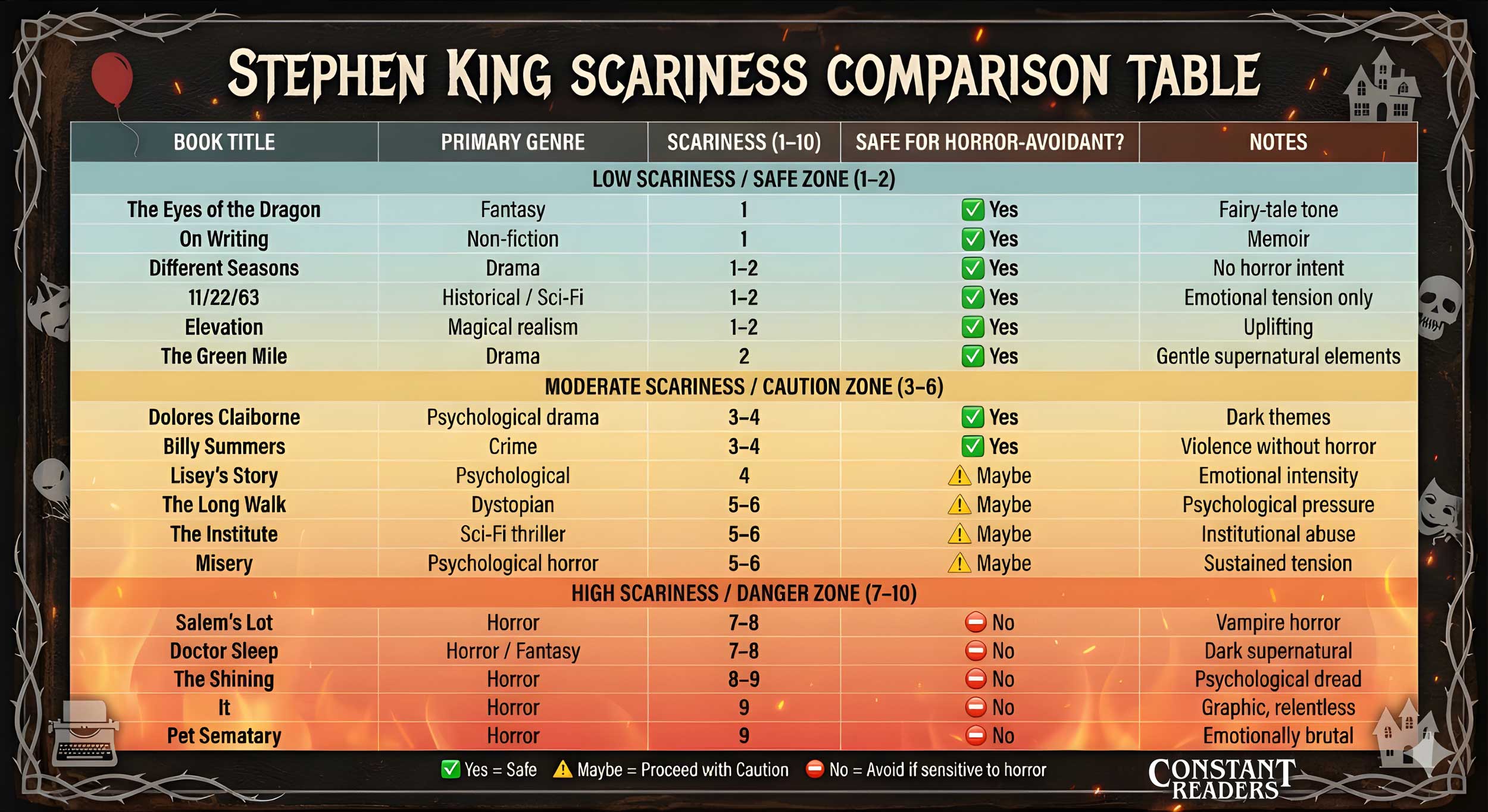
click to enlarge
Why Some Stephen King Books Feel Scarier Than Expected
Fear doesn’t always come from monsters. Grief, children in danger, loss of control, and moral collapse can hit harder than anything supernatural. Personal triggers matter, and life stage matters.
That’s why two readers can rank the same book differently.
A Safe Reading Path Based on Scariness
If you want to ease in:
- Start with Level 1–2 books
- Try one Level 3–4
- Decide whether to stop or continue
There’s no obligation to move up the scale.
How This Guide Connects to Movies and Adaptations
Film adaptations often amplify fear through sound and visuals. Some books are gentler than their movies, and some movies are gentler than their books. Knowing the book’s scariness level helps predict the adaptation.
Where to Go Next
If this helped, check out:
- beginner-only guide to Stephen King without horror
- ranked non-horror book guide
- movie-focused scariness guide
Each builds on the same idea: you don’t have to guess.
You Don’t Have to Guess With Stephen King
Stephen King’s range is much wider than his reputation. Scariness is optional. Once you know where each book sits, you can read with confidence and avoid surprises you didn’t sign up for.
That’s the point of this guide.
0 Comments